Fleet & Personal · Arizona Statewide
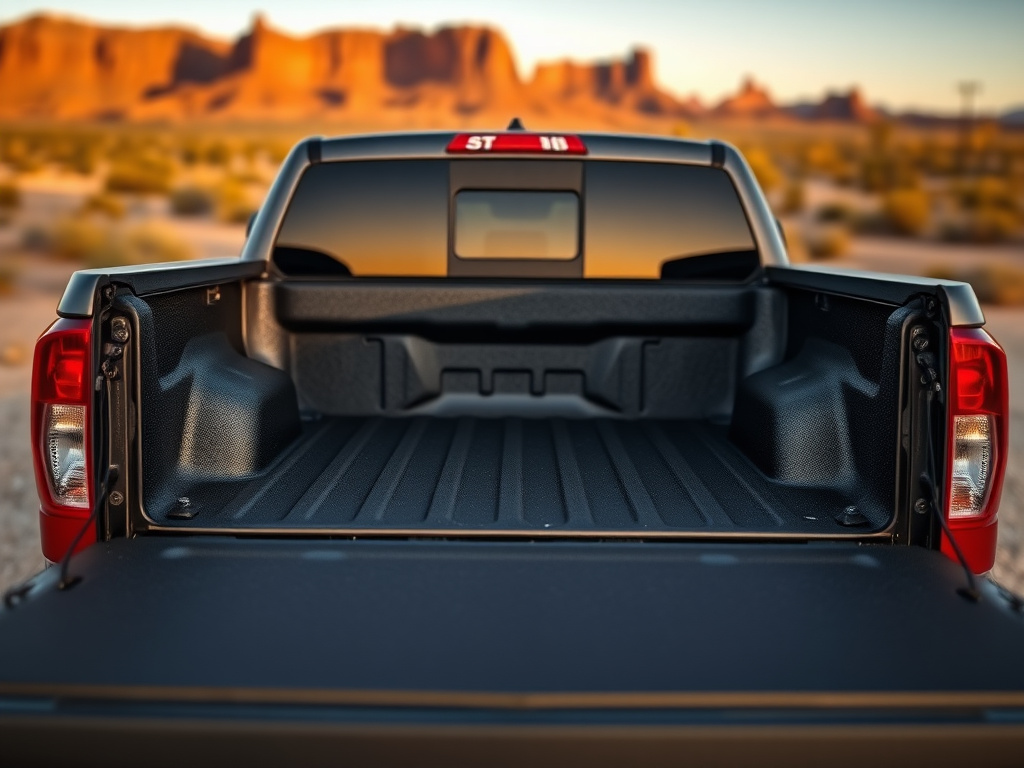
Spray-In Polyurea Truck Bed & Trailer Liners in Arizona
Real film build, a bonded seamless liner, and a UV-stable topcoat that still looks black after six Arizona summers — for pickups, trailers, flatbeds, toolboxes and equipment.
Spray-in vs drop-in
A drop-in liner protects the plastic. A sprayed liner protects the truck.
Pull a drop-in tub out of a five-year-old truck in Mesa or Gilbert and you already know what is under it: a fine grey grit paste, surface rust blooming along the bed seams, and a paint surface polished down to primer in long arcs where the tub rocked against it. That is not a defect — it is how the product works. A molded plastic tub is a separate object sitting on painted sheet metal, and everything that gets between them stays there.
Arizona accelerates all of it. Blowing dust settles into every gap during the dry months, then a monsoon cell dumps an inch of rain into the bed in twenty minutes and the whole thing becomes a slurry that cannot drain out from under the tub. Add thermal cycling — a bed floor in Phoenix easily clears 160°F in July and drops fifty degrees overnight — and the tub expands and contracts against the paint every single day.
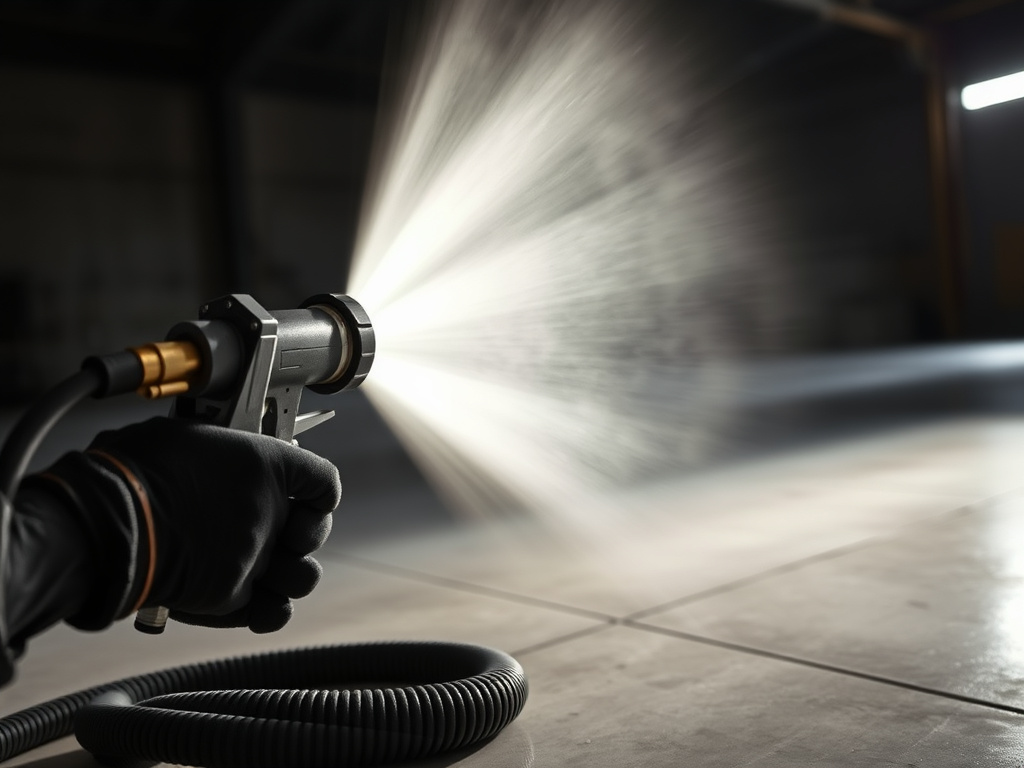
A sprayed polyurea liner has no interface to trap anything. The elastomer is chemically and mechanically bonded to abraded metal. There is no gap, no rocking, no trapped grit, no hidden corrosion cell. It conforms to every stake pocket, tie-down, seam and radius, so the parts of the bed that actually rust first are the parts that get protected best.
It also does something a tub never can: it deadens the bed. A sprayed liner cuts the drumming and rattle of loose cargo noticeably, because a 100-mil elastomer on sheet metal is a damping layer whether you wanted one or not.
What a sprayed liner gets you
- ✓Bonded seamless film — nothing gets underneath it
- ✓Corrosion protection at the seams, stake pockets and bolt holes
- ✓Impact and abrasion resistance that survives gravel, pallets and toolboxes
- ✓Cargo grip — loads stop sliding on a textured surface
- ✓Noticeably less bed drumming and cargo rattle
- ✓Original bed geometry retained — no lost width or bed depth
Specification
Ask any shop for one number: mils
Thickness is the entire conversation, and it is the number nobody advertises. Two liners can be the same resin, the same color and the same texture, and one of them can have half the material in it. On delivery day they look identical. Three years later one has worn through at the tailgate edge and the other has not.
A cheap national-franchise liner is often a 40 to 60 mil single quick pass. We spray a nominal 100 to 125 mils on the bed floor and build the tailgate top edge, rear step and wheel-well tops heavier still, because those are the surfaces that take boots, hitch balls and dragged cargo.
If a shop will not tell you a mil number, they are quoting you a spray time, not a liner.
| Material | Two-component polyurea elastomer, 100% solids, zero VOC, plural-component sprayed |
|---|---|
| Bed floor build | 100–125 mils nominal |
| Vertical sides and inner walls | 60–80 mils nominal |
| High-wear zones | Tailgate top edge, rear step and wheel wells built heavier |
| Gel time | 4–10 seconds; tack free under 60 seconds |
| Handling / return to use | Drive same day, load next morning |
| Elongation | 300–400% — flexes with a twisting frame instead of cracking |
| Tensile strength | 2,200–3,000 psi |
| Tear strength | 350–500 pli (Die C) |
| Abrasion (Taber H-18) | Typically under 40 mg loss per 1,000 cycles |
| Topcoat | Aliphatic polyaspartic UV-stable finish on all sun-exposed surfaces |
| Texture options | Fine, standard or coarse; optional aggregate for ramp and deck traction |
| Substrate profile | 80–120 grit mechanical abrasion to a uniform dull scratch, solvent wiped |
Typical values for the polyurea bed liner system we spray. Exact build and texture are set per vehicle and per use case.
The Arizona variable
Why faded purple bed liners are an Arizona signature
Drive any parking lot in Phoenix, Tucson or Chandler and count the pickups whose bed liners have gone from black to a chalky purple-grey. That is not dirt and it is not wear. It is aromatic polyurea degrading under ultraviolet light.
The chemistry is straightforward. Aromatic isocyanates contain a benzene ring that absorbs UV energy directly. The bond breaks, the polymer at the surface degrades, and you get chalking, color drift and gloss loss. Aromatic resin is tough, inexpensive and completely appropriate for anything that lives out of the sun. Aliphatic resin has no absorbing ring, costs substantially more, and holds color essentially indefinitely.
Most of the industry sprays a straight aromatic liner because it is cheaper and because in Seattle it takes a decade to notice. In an environment averaging over three hundred sunny days a year with UV index readings that peak at 11 or higher, you notice in the second summer.
What we do instead
Aromatic base for build and toughness where it is shaded and protected. Aliphatic polyaspartic topcoat on every surface the sun actually touches — bed floor, inner walls, rail caps if you go over-rail, tailgate, and any exterior body work. The topcoat adds cost and it adds a step. It is also the only reason a black liner is still black in year six.
Heat matters too. A bed floor in a July Phoenix parking lot will sit well above 150°F, and that thermal load is exactly the condition where an under-built or under-cured liner starts to soften and mark. Polyurea's service band runs from below freezing to 250°F, which is why the same material works in a Flagstaff snow plow truck and a Yuma agricultural fleet without changing chemistry.
It is the same reasoning behind everything else we install — see polyurea vs epoxy for the full material argument.
The install day
Sanding and masking take four times longer than spraying
Polyurea does not bond to gloss. Every square inch of factory clearcoat has to be mechanically dulled first, and every line the customer will ever look at is set by the tape, not the gun.
Strip & Inspect
Tailgate hardware, bed bolts, tie-downs and lights out. Rust, dents and prior liner assessed before a price is confirmed.
Abrade
Full mechanical sanding to 80–120 grit. Every square inch dulled — gloss factory clearcoat is a bond breaker.
Clean & Mask
Solvent wipe, tack cloth, then hard-line masking. The tape line is what makes it look factory instead of homemade.
Spray
Heated plural-component polyurea at spec build, hot zones first, texture set by gun distance and pressure.
Topcoat & Reassemble
Aliphatic UV topcoat on exposed surfaces, hardware back in, edges dressed, keys back the same evening.
Prep
The three things that make a liner peel
Gloss. Factory clearcoat is a release surface. A liner sprayed onto unsanded paint will look perfect and then lift in a sheet the first time somebody drags a toolbox out. We sand every surface to a uniform 80 to 120 grit dull scratch pattern, including the awkward geometry — stake pocket returns, the underside of the rail lip, the tailgate hinge pockets. If it is going to be coated, it gets abraded.
Contamination. Wax, silicone, road film and diesel residue all defeat a chemical bond. After sanding we solvent wipe and tack the entire bed. A truck that has been through a wax tunnel needs more wiping, not less.
Rust. Coating over active corrosion buys you a liner sitting on a surface that is still deteriorating underneath. Surface rust gets ground back to bright metal. Perforation gets repaired or the customer gets told honestly that it should be, before we take the job.
This is the same discipline that governs our concrete work — the failure is almost never the material. Read how we prep slabs and you will recognize the pattern.
Options
Over-rail, under-rail, texture and color
Over-rail carries the liner up and across the bed rail caps and down the outer lip. It protects the surface that ladders, lumber, kayaks and ratchet straps actually contact, and it is the correct answer for a working truck. It also permanently changes the truck's appearance and can interfere with some rail-mounted racks and tonneau clamps, so we check accessory fitment first.
Under-rail terminates at the inside top edge with a taped line, preserving factory rail caps and hardware. Cleaner on a late-model daily driver, and the correct answer if a tonneau cover is going back on.
Texture is controlled at the gun — distance, pressure and pass pattern. Fine texture cleans out easily and suits a truck hauling clean cargo. Coarse texture grips hard, which is what you want on a trailer deck or a ramp, and takes more effort to sweep out. On loading ramps and horse-trailer floors we broadcast an aggregate into the wet film for genuine traction rather than relying on the spray pattern alone.
Color is black by default because black hides everything. Tinted aliphatic topcoats in body-matched colors and safety colors are available and hold their color well — a tinted aromatic liner is the one thing we will not do, because it will fade unevenly and look worse than black ever would.
Beyond the pickup
Trailers, flatbeds, toolboxes and equipment
Bed liners are where most people first meet sprayed polyurea, but trailers are where it earns the most money back. A wood trailer deck in Arizona takes UV, monsoon soaking and equipment tracks; a sprayed membrane seals the wood, waterproofs the fastener heads and stops the checking and splintering cycle that ends in a deck replacement. Steel decks get the same benefit against corrosion.
Horse and livestock trailer floors are a particularly good fit — sealed, sanitary, pressure-washable, and textured enough that animals have footing on a wet ramp. Dump-insert beds, service bodies, utility beds, generator skids and tool cribs all take the same chemistry.
- ✓Trailer floors, ramps and gates — wood, steel and aluminum
- ✓Flatbed decks and headache racks
- ✓Horse, livestock and cargo trailer interiors
- ✓Toolboxes, service bodies and utility beds
- ✓Jeep tubs, rocker panels and bumpers
- ✓Fleet vehicles — batch scheduling across Phoenix, Mesa, Gilbert and Chandler
- ✓Equipment skids, housings, tanks and ATV racks
Living with it
Care, longevity and what a warranty should actually say
Cleaning
Hose it, pressure wash it, degrease it. Polyurea does not care. Avoid parking a loaded bed with damp organic material sitting in a corner for weeks — that stains any surface eventually. Fine-texture liners rinse clean; coarse texture needs a brush.
Life expectancy
A properly prepped, properly built liner with an aliphatic topcoat should outlast your ownership of the truck. Real-world Arizona failures cluster in two places: liners sprayed too thin over unsanded paint, and aromatic-only liners that were never topcoated and chalked out under UV.
Warranty
Ours is written against the two things that can actually go wrong: adhesion and cracking. A warranty that excludes UV fading on a black liner in Arizona is telling you what resin was used. Read that exclusion list before you buy anywhere.
Bed liner questions
The questions truck owners actually ask
More on chemistry, cure and cost in the full FAQ and on the blog. We cover Phoenix, Tucson, Mesa, Scottsdale, Chandler, Gilbert, Flagstaff and Prescott — see service areas.
Get a liner quoteIs a spray-in bedliner better than a drop-in?
+
For anything you actually use, yes. A drop-in is a molded plastic tub that sits on painted sheet metal, and the gap between the two collects sand, water and salt. Every load shifts the tub a fraction of an inch and the trapped grit lapping-compounds the paint off. Arizona makes this worse because monsoon dust gets everywhere and then it rains on it. A sprayed liner is chemically bonded to the metal — nothing gets underneath it because there is no underneath.
How thick should a spray-in bed liner be?
+
We build a truck bed at a nominal 100 to 125 mils on the floor and 60 to 80 mils on the vertical sides and inner bed walls, with extra build on the tailgate top edge and the rear bumper step where boots and cargo land. Discount franchise liners are frequently sprayed at 40 to 60 mils to hit a price point. It looks the same on delivery day. It does not look the same after two years of loading pallets and gravel.
Will a black spray-in liner fade in the Arizona sun?
+
Aromatic polyurea will — it chalks and drifts toward a purple-grey haze, which is exactly what you see on faded liners around Phoenix. Aromatic resin absorbs UV and the surface degrades. We spray an aromatic base for cost and toughness where it is not exposed, then finish exposed surfaces with an aliphatic UV-stable topcoat. That topcoat is the difference between a liner that still looks black in year six and one that looked tired in year two.
Over-rail or under-rail — which should I get?
+
Over-rail wraps the bed rail caps and gives you full protection where a ladder, a kayak or a load strap actually contacts the truck. It also permanently changes the look of the truck and complicates fitting some rail-mounted accessories. Under-rail stops at the top inside edge and keeps your factory rail caps and tonneau hardware. If the truck works, go over-rail. If it is a clean daily driver with a cover and accessories, under-rail with taped edges is usually the right call.
How long does the truck have to stay with you?
+
One day for a standard bed. We take the truck in the morning, pull the tailgate hardware and bed bolts, sand and mask, spray in the early afternoon, and the polyurea is tack free in under a minute and handling hard within the hour. Most customers drive away the same evening and can load the next morning. Trailers, flatbeds and multi-piece equipment jobs run longer depending on how much disassembly is involved.
Can you spray something other than a truck bed?
+
Regularly. Trailer floors and ramps, horse and livestock trailers, utility and service bodies, flatbed decks, toolboxes, Jeep tubs, rocker panels, bumpers, dump insert beds, ATV racks, generator skids, tool cribs and equipment housings all take the same chemistry. Anything metal, fiberglass or sound wood that we can properly abrade and mask is a candidate. Send a photo and we will tell you honestly whether it is worth it.
Services
Other systems we spray
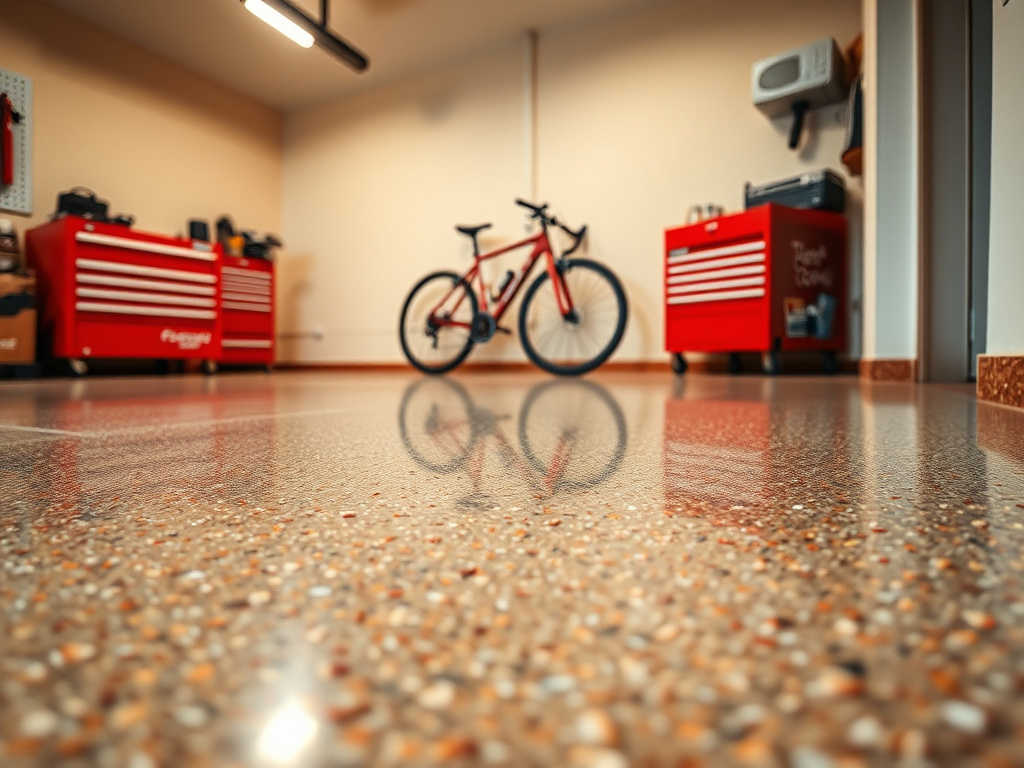
Garage Floor Coatings
One-day polyaspartic flake systems that shrug off hot-tire pickup, monsoon grit and 160°F slab temperatures.
Explore this system →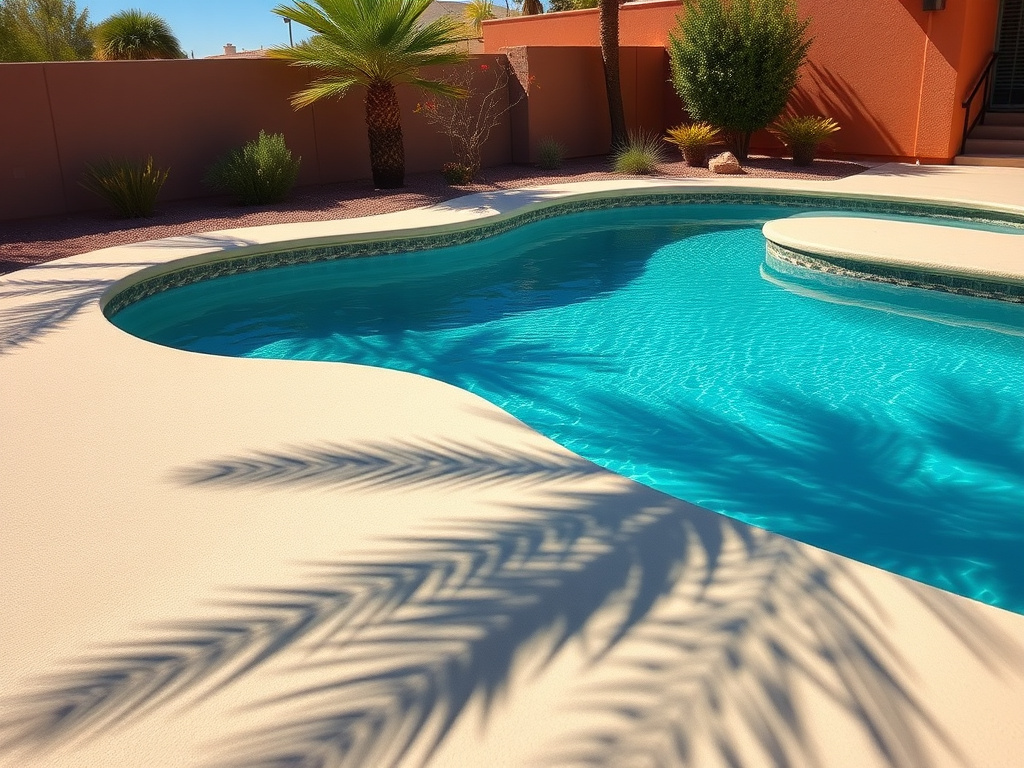
Patio & Pool Deck Coatings
Textured, heat-reflective cool-deck finishes that stay barefoot-friendly through a Phoenix July.
Explore this system →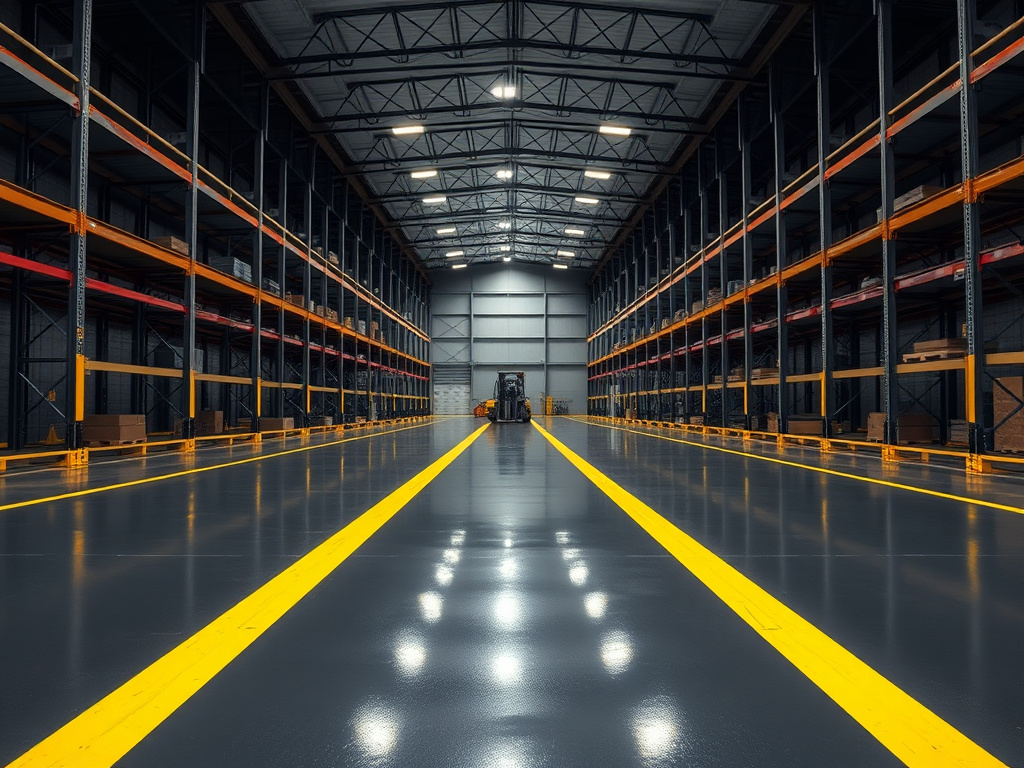
Warehouse & Industrial Floor Coatings
Seamless high-build systems for distribution centers, plants and hangars — back in service the next shift.
Explore this system →Get your bed or trailer quoted
Tell us the year, make, bed length and whether you want over-rail or under-rail. We'll give you a firm number and a day.