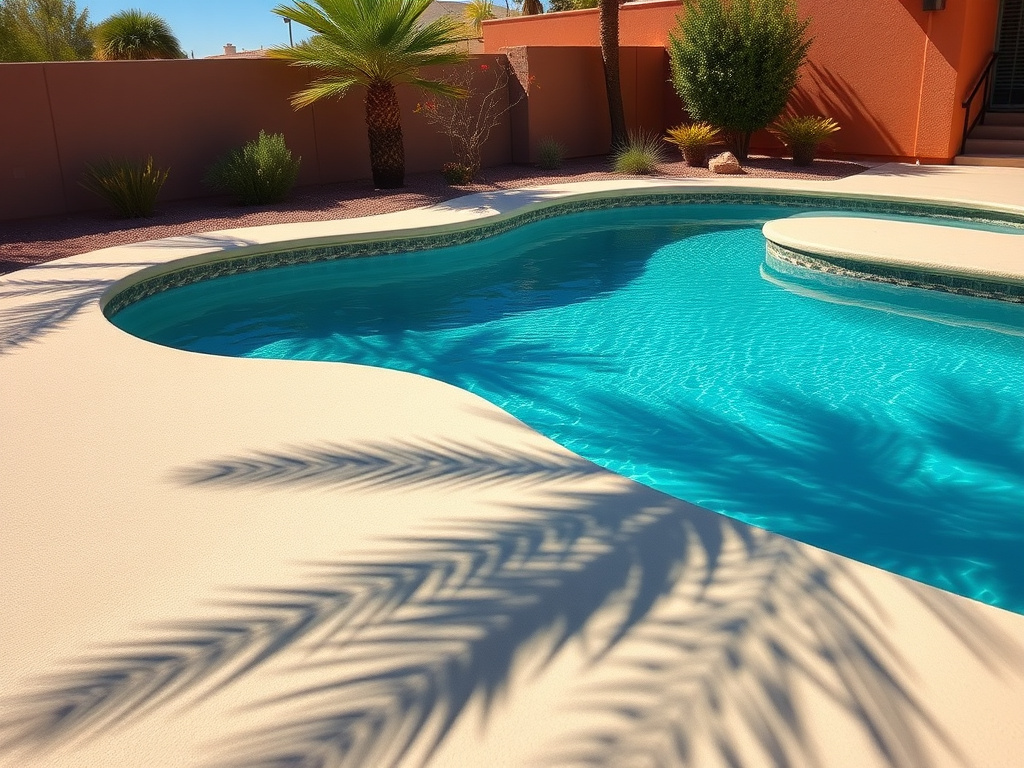
Outdoor Living · Barefoot Rated
Pool Deck & Patio Coatings for Arizona Sun
Textured, light-value, UV-stable polyaspartic systems that resurface a tired deck in two days and stay walkable barefoot through a Phoenix July — without the chalking and recoat cycle of an acrylic overlay.
25–40°F
Cooler than dark surfaces
0.60+
Wet DCOF target
40–60
Mesh aggregate
10+ Yr
Color hold in full sun
The barefoot problem
A pool deck in Phoenix is a solar collector you are expected to walk on
On a 112°F afternoon in Chandler, a plain grey concrete deck will read 140 to 150°F on an infrared thermometer, and a dark exposed-aggregate or stained deck will push past 160°F. Skin begins to feel pain at roughly 111°F and burns with sustained contact above 120°F, which is why every Arizona family with a pool develops the same hopping gait between the door and the water from May through September. It is not a comfort preference. It is a genuine surface-temperature problem with a genuine materials answer.
Three properties control what your feet feel, and only one of them is chemistry. The first is solar reflectance — value, not hue. A light sand, bone or pale grey deck reflects far more of the incoming solar load than a charcoal one, and the measured difference at midday is commonly 25 to 40°F on identical substrates side by side. The second is texture. A broadcast aggregate profile reduces the contact area between skin and surface, and lets a thin layer of moving air sit in the valleys. The third is thermal mass at the surface, which is where a thin resinous film genuinely beats a thick stone or paver assembly during the hottest hours.
Then there is what the sun does to the coating itself. Aromatic resins — including most epoxies and the cheaper polyureas — contain benzene rings that absorb ultraviolet energy and break down. The visible result is ambering, chalking and gloss loss, and it happens fast in Arizona, where a west-facing deck in Scottsdale absorbs more annual UV than almost anywhere in the country. Aliphatic chemistry does not have those rings. On any exterior surface in this state, an aliphatic topcoat is not an upgrade, it is the minimum viable specification.
Add the mechanical loads nobody thinks about — patio furniture dragged across the surface, a monsoon that dumps an inch in twenty minutes and floods the coping line, pool chemistry, and a slab that moves seasonally on expansive Valley clay — and it becomes clear why the paint-store waterproofing product on the shelf lasts two summers.
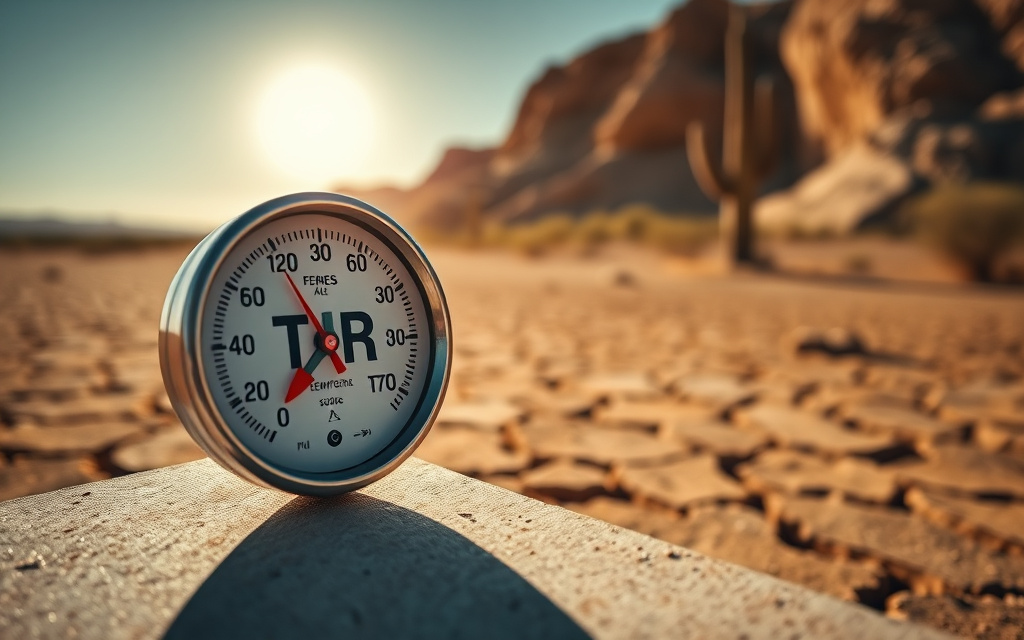
Why texture beats chemistry on temperature
Two decks coated with the identical resin can feel twenty degrees apart. Value and profile do the work — the resin decides how long it lasts.
- ✓Light-value pigment: the single biggest lever on felt temperature
- ✓Broadcast profile: cuts skin contact area and lets air move underfoot
- ✓Thin film over concrete: sheds heat faster at dusk than stone or pavers
- ✓Matte topcoat: less specular glare off the water line at low sun angles
System specification
Aggregate selection is the decision that makes or breaks a deck
Everything else on the spec sheet is fairly settled trade practice. Aggregate is where judgment enters, because a pool deck has to satisfy two requirements that pull directly against each other: it must not be slippery when someone climbs out of the water, and it must not be punishing to a child who kneels on it or an adult who walks it barefoot forty times a day. A garage floor only has to satisfy the first.
Grade solves it. A 40–60 mesh rounded silica broadcast produces measurable wet traction with a soft, sand-like hand feel — it is our default across Phoenix, Mesa, Gilbert and Tucson decks. Angular aluminum oxide bites harder and holds up longer under furniture, so it goes on steps, ramps and the wet apron immediately at the coping, but we keep it out of lounge areas. Polymer bead is the gentlest option and the right call on decks that see a lot of small children, at the cost of some long-term abrasion life.
Broadcast density matters as much as grade. Too heavy and the deck reads as sandpaper regardless of grade choice. Too light and the traction disappears in the first traffic lane to wear. We broadcast into a wet bodycoat at a controlled rate rather than to refusal, then lock everything under the polyaspartic topcoat so the aggregate cannot be walked loose.
The last detail is the joint plan. Expansion and control joints on a pool deck are doing real work — they are the release valve for a slab that expands against the bond beam every summer. Bridging them with a continuous film is how a monolithic deck develops a random crack six inches away from the joint it should have had. We honor every joint and fill it with a flexible sealant matched to the deck color.
| System build | Pigmented polyurea bodycoat + graded aggregate broadcast + aliphatic polyaspartic topcoat |
|---|---|
| Total dry film thickness | 18–25 mils typical over sound concrete; 25–35 mils where texture is rebuilt |
| Surface profile | ICRI CSP 3 by diamond grind or shot blast; acrylic overlays tested before they are kept |
| Aggregate | 40–60 mesh rounded silica, aluminum oxide or polymer bead — selected for barefoot comfort |
| Wet slip resistance | Target DCOF 0.60+ (ANSI A326.3 method) across the full wet perimeter |
| Solar reflectance | Light-value formulations measure 25–40°F cooler at midday than charcoal or exposed aggregate |
| Elongation at break | 300–400% — bridges hairline cracking and seasonal slab movement |
| UV performance | Aliphatic topcoat: no ambering, gloss and color retention past 10 years in direct Sonoran sun |
| Chemical exposure | Chlorinated and salt-system water, muriatic acid splash, sunscreen oils, fertilizer overspray |
| Return to service | Foot traffic 6 hours · furniture 24 hours · full immersion-edge cure 72 hours |
Typical Valley residential deck specification. Flagstaff and Prescott decks are re-spec'd for freeze-thaw and de-icing salt exposure.
The resurfacing sequence
Most decks are a two-day job, and day one never involves resin
Pool deck resurfacing goes wrong at the edges — coping, step nosings, drains, the transition to travertine or turf. Those details take the time. The field is the easy part.
Assess & Test
Adhesion pull tests on any existing overlay, moisture check, crack mapping, and a slope check toward the pool coping.
Strip & Profile
Grind or shot blast to CSP 3 — failed acrylic overlays removed entirely, sound ones abraded and kept.
Repair & Detail
Crack chase and fill, spall rebuild at coping and step nosings, expansion joints honored rather than bridged.
Base & Broadcast
Pigmented bodycoat applied, then 40–60 mesh aggregate broadcast to the traction level selected for barefoot use.
Seal & Cure
Aliphatic polyaspartic topcoat locks the aggregate in, then a short cure window before the deck goes back into use.
Elevation changes everything
The same deck system gets three different specifications in this state
We build decks from the low desert to the high country. If a bidder quotes Prescott the same way they quote Phoenix, they have not thought about your slab.
Low Desert
Phoenix · Mesa · Chandler · Gilbert
Heat and UV dominate. Light-value pigment, generous broadcast for barefoot traffic, aliphatic topcoat mandatory, and install windows pushed to early morning because the slab is the clock. Monsoon dust means grit abrasion is the main long-term wear mode.
Mid Desert
Tucson · Casa Grande
Similar thermal loading with more moisture-vapor drive through older, un-retarded slabs. Testing before the bid is not optional here; a marginal moisture reading sends us to a mitigation primer rather than straight to bodycoat.
High Country
Flagstaff · Prescott
Freeze-thaw and de-icing salt replace heat as the design driver. Higher elongation build, strict joint honoring, salt-tolerant primer, and darker colors become acceptable because surface temperature stops being the constraint.
Finish direction
Travertine, flagstone and sandstone looks without the stone
Most Scottsdale and Paradise Valley clients come to us wanting the look of a travertine or flagstone deck without the sixty-dollar-a-foot install, the settling pavers, or the weeds in the joints. A pigmented polyaspartic deck delivers that through a base value plus a hand-applied accent — mottled desert tans, warm bone over grey, or a knock-down texture that reads like a sandstone flag from six feet away.
We also do straight solid-color decks, and honestly they are the smarter buy on a large open deck where a busy pattern would fight with the water and the landscaping. Border banding at the coping, a contrasting step nosing for visibility, and a saw-cut pattern picked back up in the coating are all standard options rather than upcharges on most jobs.
One practical note on gloss: we default to satin or matte outdoors. A high-gloss exterior deck throws hard specular glare off the pool surface at low sun angles, and it shows every water spot from a hard-water fill. Matte hides the desert and is easier to live with.
Beyond the pool
The same system covers most of the exterior concrete on the property
Once a crew is mobilized with grinders and resin, extending to the adjacent concrete is usually the cheapest square footage on the whole project.
- ✓Covered patios, ramadas and outdoor kitchen floors
- ✓Front entries, courtyards and casita walkways
- ✓Step treads and nosings with contrasting-color safety banding
- ✓Spa surrounds, water-feature aprons and splash pads
- ✓Balconies and second-story decks over occupied space
- ✓Walkways connecting the deck to a coated garage or shop
Homeowners who resurface the deck frequently do the garage floor in the same week — different aggregate, different traction target, same crew and one mobilization.
Maintenance reality
Rinse it, sweep it, and stop thinking about it
The recoat cycle is the honest cost comparison against an acrylic overlay. An overlay that needs redoing every four years costs more over twelve than a polyaspartic deck that needs nothing.
Get a deck quoteA finished polyaspartic deck is non-porous, which is the property that drives everything about maintaining it. Sunscreen does not soak in and shadow the traffic lanes. Fertilizer overspray from the landscaper does not stain orange. Monsoon mud hoses off instead of embedding in a texture. Algae at the shaded north edge wipes off with a deck brush rather than requiring a chemical treatment that then attacks the surface.
Practical routine: blow or sweep the grit off weekly, hose it down when it looks dusty, and use a neutral cleaner and a soft-bristle push broom two or three times a season. Avoid high-solvent strippers and undiluted chlorine sitting on the surface for hours — neither will destroy the film, but there is no reason to test it. Furniture glides on chair legs are worth the ten dollars.
Expect the aggregate profile to soften slightly in the busiest traffic lane over a decade. That is normal wear in a broadcast system and it is addressed with a single refresh topcoat pass, not a tear-out — a one-day visit against the full reconstruction an overlay eventually demands. Detailed prep and repair background lives on our concrete preparation page, and the broader material argument is on polyurea vs epoxy.
What is the best pool deck coating for Arizona heat?
+
A light-value, textured, UV-stable aliphatic polyaspartic system over properly profiled concrete. Three variables decide how hot the surface gets underfoot: solar reflectance (light colors can run 25–40°F cooler than dark ones at the same time of day), surface texture (a broadcast profile reduces the skin contact area and lets air move under your foot), and thermal mass at the surface. Chemistry matters for durability, but color and texture are what your feet actually feel on a 112°F Phoenix afternoon.
How is a polyaspartic pool deck different from traditional cool deck?
+
Traditional cool deck is a cementitious acrylic overlay — a thin, porous, knock-down texture that gets its cooling from air voids and light color. It works, and it is inexpensive, but it chalks under Arizona UV, absorbs sunscreen and pool chemistry into its pores, and typically needs recoating every three to five years. A polyaspartic system is a non-porous elastomeric film with the aggregate locked inside it. It costs more up front, resists staining and chlorine, bridges hairline cracks the overlay would telegraph, and holds color for well past a decade.
Will a pool deck coating be slippery when wet?
+
Not when it is specified correctly, and slip resistance around water is the one number we will not compromise on. We broadcast a 40–60 mesh aggregate — rounded silica, aluminum oxide or polymer bead depending on how barefoot-friendly the area needs to be — into the bodycoat and lock it under the topcoat. The target is a wet dynamic coefficient of friction of 0.60 or better, comfortably above the 0.42 threshold commonly cited for wet walking surfaces, while still being tolerable to kneel on.
Can you coat over an existing cool deck or acrylic overlay?
+
Sometimes, but we test before we promise. Old acrylic overlays are frequently only marginally bonded to the slab beneath them, and any new system is only as strong as the weakest layer under it. We pull adhesion tests in several locations; if the overlay comes up at low tension or sounds hollow underfoot, it gets ground off entirely. If it is sound and well bonded, we can profile it mechanically and build over it, which saves both removal labor and disposal.
How does chlorine, salt and sunscreen affect the coating?
+
An aliphatic polyaspartic film is essentially indifferent to pool chemistry at the concentrations found on a deck. Chlorinated water, salt-system brine, muriatic acid splash during a service call and sunscreen all sit on the surface rather than penetrating it, and rinse off. This is the single largest practical difference from a porous overlay, which absorbs sunscreen oil into its texture and develops permanent shadowing along the traffic lanes within a couple of seasons.
Does a pool deck coating work at elevation in Flagstaff or Prescott?
+
Yes, but with a different specification than a Valley deck. Above 5,000 feet the design problem inverts from heat to freeze-thaw: water enters hairline cracks, freezes overnight, expands, and works the crack wider each cycle. A high-country deck gets a more flexible, higher-elongation build, closer attention to joint honoring, a de-icing-salt-tolerant primer, and a darker color specification is actually acceptable there because surface temperature is no longer the limiting factor.
Services
Other Arizona coating systems we install
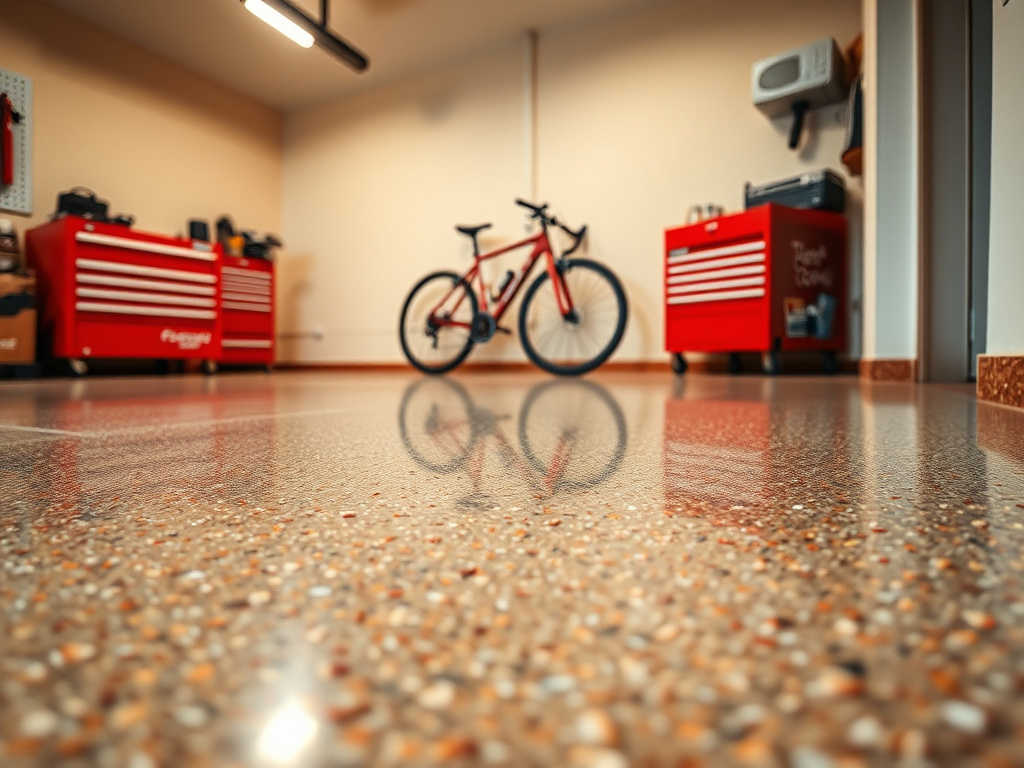
Garage Floor Coatings
One-day polyaspartic flake systems that shrug off hot-tire pickup, monsoon grit and 160°F slab temperatures.
Explore this system →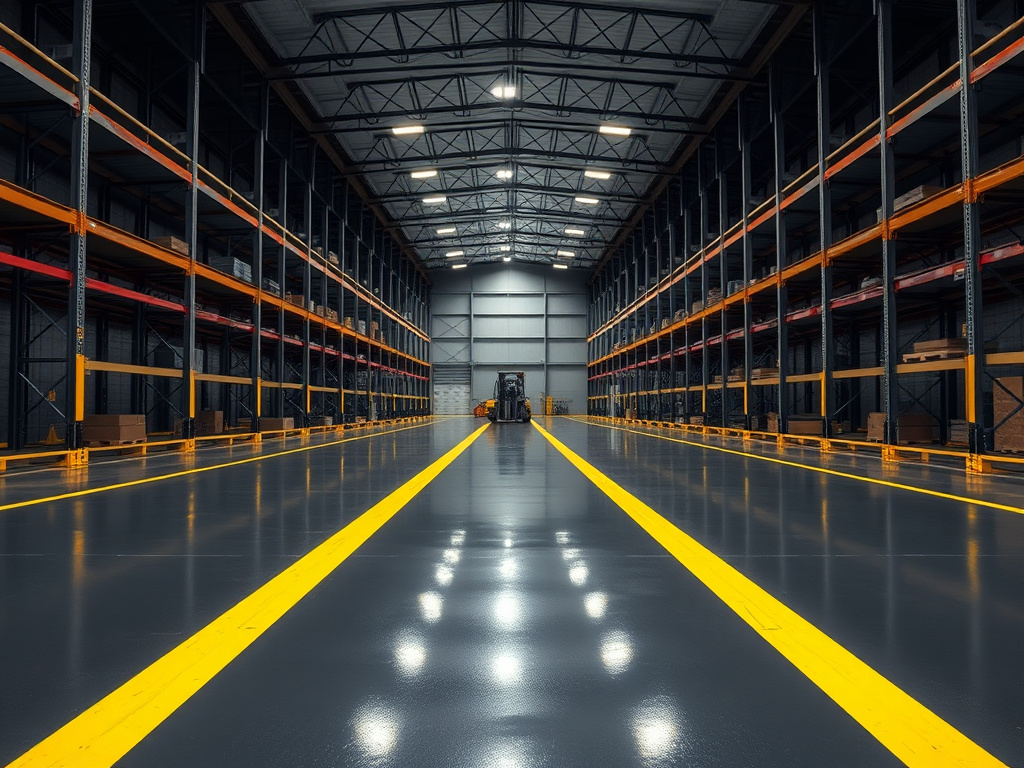
Warehouse & Industrial Floor Coatings
Seamless high-build systems for distribution centers, plants and hangars — back in service the next shift.
Explore this system →
Secondary Containment & Tank Coatings
Monolithic chemical-resistant linings for berms, sumps, trenches and above-ground tank exteriors.
Explore this system →Get a free pool deck quote
Send us the approximate square footage, what is on the deck now, and the city. We will walk it, test it, and come back with an itemized number.