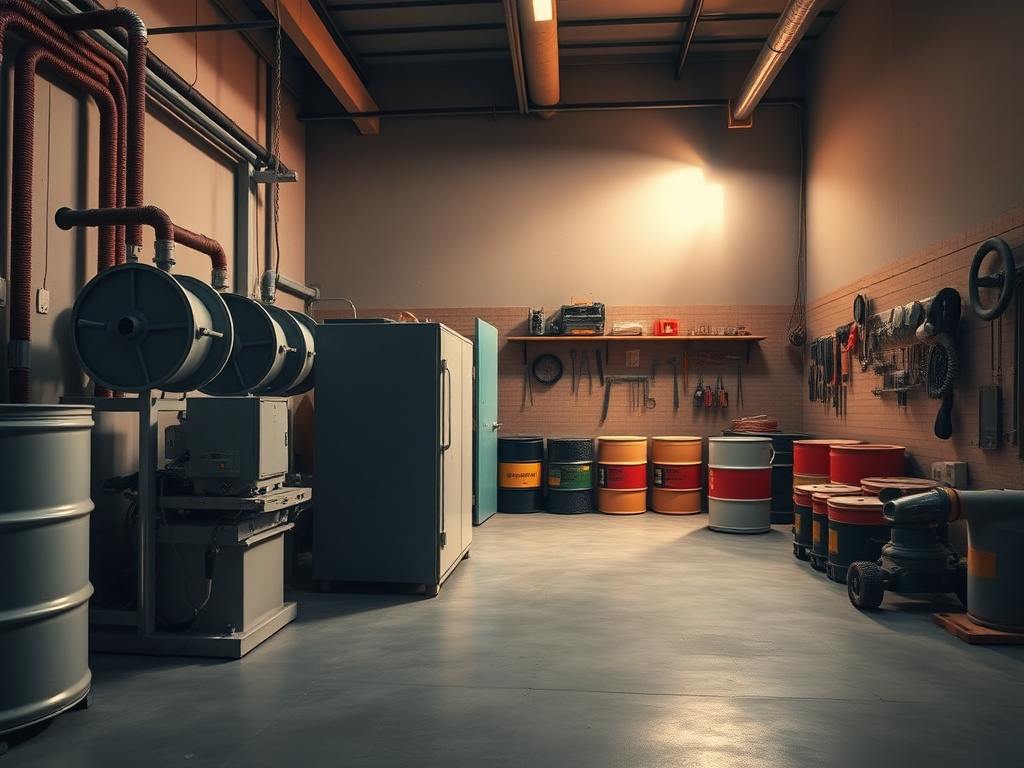
A dedicated applicator, not a flooring generalist
We Install One Material Family, Across One State
Arizona Polyurea is a polyurea, polyaspartic and polyurethane coating applicator working statewide. No tile, no carpet, no side trades — one chemistry family, specified three different ways for three different Arizona climates.
Specialist versus generalist
What a dedicated polyurea applicator actually is
Most companies that will coat your garage floor are flooring contractors who also do coatings. Coating is one line in a catalog that includes tile, luxury vinyl, carpet and polished concrete, and the coating crew is whoever was available that week. That is not a criticism of their integrity — it is a description of where their depth sits. Depth follows repetition, and a crew that sprays polyurea four times a year is not the same crew as one that sprays it four times a week.
We do the opposite thing. Polyurea, polyaspartic and polyurethane are the only materials we install, which means every decision on a job site is being made by someone who has made that decision hundreds of times: how much longer to grind a soft slab, whether a hairline needs chasing or will bridge on its own, when a surface is too close to dew point to start, how a flake broadcast changes as the ambient temperature climbs through the morning.
It also means we will tell you when the answer is no. There are floors where a densified and polished slab is the smarter spend, interior storage rooms where an epoxy is perfectly adequate and cheaper, and slabs whose real problem is structural and will not be solved by any membrane. A company that only sells coatings has an incentive to sell you one anyway. A company that intends to be doing this in ten years does not.
The trade term for what we are is an applicator rather than an installer, and the distinction is not cosmetic. An installer puts down a product. An applicator specifies a system — substrate preparation, primer, base resin, film thickness, aggregate, topcoat chemistry and cure schedule — and takes responsibility for whether that system is right for the conditions it will live in. Those are different jobs requiring different knowledge.
What we are, plainly
- ✓A polyurea, polyaspartic and polyurethane applicator — nothing else
- ✓Statewide, with routed crews rather than a single metro footprint
- ✓Equipped with heated plural-component proportioners, not roller kits
- ✓Mechanical prep only — diamond grinding and shot blasting
- ✓Aliphatic topcoats on every surface that sees sun, without exception
- ✓Residential, commercial and industrial from the same crew discipline
- ✓Willing to tell you when a coating is the wrong answer
Polyurea Only
Single material family
Plural-Component
Heated proportioner rigs
Grind, Never Etch
Mechanical prep standard
3 Climate Zones
Specified separately
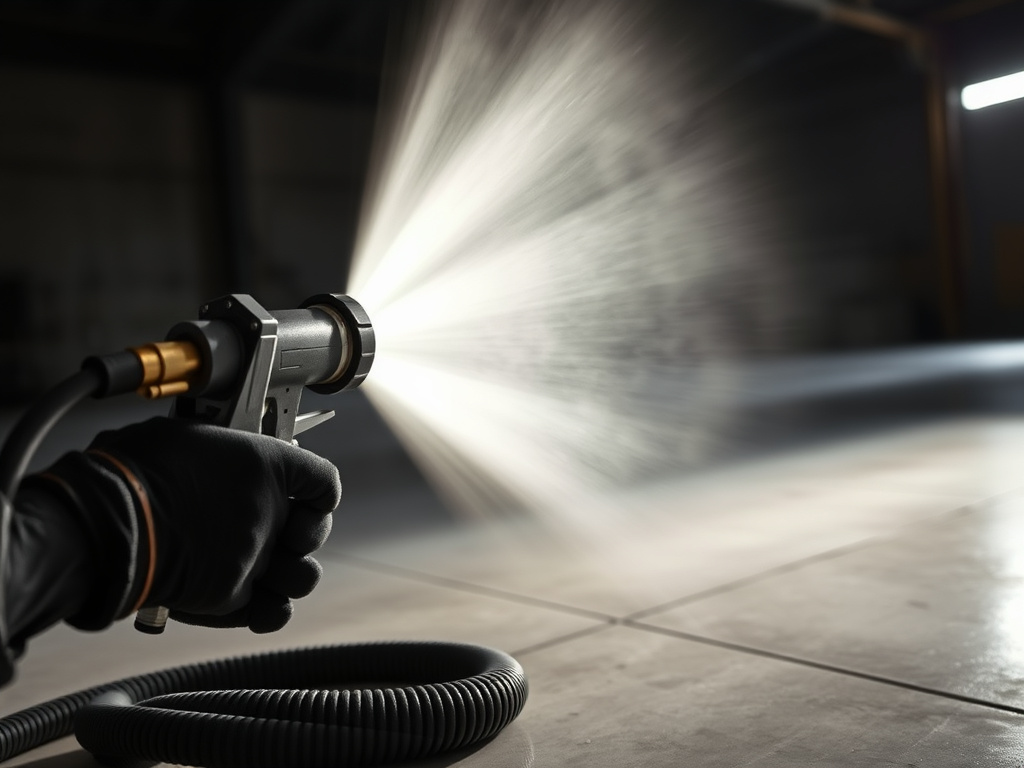
Impingement mixing happens inside the gun, milliseconds before the material reaches the concrete. There is no pot, no bucket and no window in which a mistake can be corrected — which is exactly why the equipment and the operator are the job.
The equipment question
Why plural-component gear decides who can install this material
True polyurea cannot be poured, rolled or squeegeed. The two components must be heated to roughly 150°F, held at high pressure, metered at a precise volumetric ratio and combined by impingement inside the spray gun itself. The reaction begins on contact and the film gels within seconds. That is the property that makes a one-day install possible and lets us line a vertical containment wall without the material sagging — and it is also the property that makes the equipment non-negotiable.
A heated plural-component proportioner is a serious machine. It has to hold both sides at temperature through a heated hose, maintain ratio under changing pressure, and be flushed and rebuilt on a maintenance schedule or it will drift off-ratio and lay down material that never properly develops its properties. Ratio drift is invisible to the naked eye on the day of the install and shows up as sticky spots, soft film or premature failure months later.
This is also why the consumer products marketed as polyurea in home improvement stores are not the same thing. Single-component moisture-cured hybrids in a can borrow the name; they do not have the chemistry, the film build or the cure profile. If a product can be applied with a roller out of a bucket at room temperature, it is not the material described anywhere on this site.
The practical consequence for you is simple: when you evaluate bids, you are not really comparing products. You are comparing whether the applicator owns and maintains the equipment, and whether the person running the gun has enough hours behind it to read the film as it goes down.
The prep-first philosophy
Nearly every failed floor we are called to replace failed at the bond line
A large share of our residential work is the second coating on a slab. The first one peeled, lifted in sheets under a hot tire, or came up with the tape when someone removed a floor mat. In almost every case the coating itself was fine — it had bonded perfectly to a layer that was never bonded to the concrete.
Acid etching is the single most common cause. It is fast, it is cheap, it requires no equipment, and it produces a surface that looks profiled and is not. Etching opens the surface unevenly, can leave salts behind if neutralizing and rinsing are done casually, and never achieves the consistent CSP 2–3 texture that a coating needs to key into mechanically. We grind, every time, with shot blasting reserved for heavier industrial builds.
The second most common cause is moisture. Concrete moves water vapor from the ground up through the slab, and if a vapor-impermeable membrane is applied over a slab pushing enough of it, hydrostatic pressure will eventually break the bond from underneath. This is more frequent in Tucson and the southern corridor and on older slabs poured without a vapor barrier. It is also entirely testable, which is why we test rather than hope, and why moisture mitigation shows up as its own line item when the numbers call for it.
Prep is also where the money goes, and that surprises people. On a typical residential job the grinding, repair and cleanup consume the majority of the labor hours while the spray application takes a fraction of the day. When a bid comes in dramatically under everyone else, the prep line is almost always where it was cut, and prep is the one part of a coating job you can never inspect after the fact.
Assess
Moisture testing, profile checks, crack mapping and adhesion pull tests on any existing coating — before a number is written.
Specify
Resin system, film build, aggregate and topcoat chosen for the exposure, the elevation and the traffic, not from a default sheet.
Prepare
Diamond grinding or shot blasting to CSP 2–3 under HEPA extraction, then repair, then re-grind flush.
Apply
Heated plural-component polyurea at spec thickness with broadcast to refusal, monitored against slab temperature and dew point.
Verify
Thickness checks, cure confirmation, walk-through with the owner, and written return-to-service times for foot and vehicle traffic.
Statewide, specified locally
Three Arizonas, three specifications
Working the whole state is not a marketing line about driving further. It changes what we install, because the failure modes invert as you climb.
Low desert
Phoenix · Mesa · Chandler · Gilbert · Yuma
Heat and ultraviolet exposure dominate. Slab temperatures well past 140°F, ten hours of direct sun on west-facing decks, and hot-tire pickup as the classic residential failure. Specification priorities: high thermal tolerance in the base, an aliphatic topcoat on anything exposed, light-reflective aggregate on pool decks, and installation scheduled against slab temperature rather than the clock.
Southern corridor
Tucson · Sierra Vista · Casa Grande
Heat is still a factor, but monsoon-driven moisture becomes the dominant failure mode. Older slabs poured without vapor barriers push measurable vapor, and humidity swings put dew point in play during application windows. Specification priorities: moisture testing on every job, vapor-mitigating primers where the numbers demand it, and dew point discipline at the start of the day.
High country
Flagstaff · Prescott · Sedona · Show Low
Above roughly five thousand feet the problem inverts. Freeze-thaw cycling, water intrusion at edges and joints, and de-icing salt attack replace heat as the enemy. Specification priorities: maximum flexibility and crack bridging, low permeability, cold-weather primer selection, and careful detailing at thresholds and joints where water finds a way in.
Warranty philosophy
A warranty is a description of what we control
A long warranty number on a brochure means very little on its own. What matters is which failures it names and which it quietly leaves out, and the honest version of that document is short and specific rather than long and vague.
Ours addresses the outcomes that follow from our decisions: adhesion failure and delamination, peeling, hot-tire lift, and ultraviolet color hold on the aliphatic topcoat. Those are the things a correctly specified and correctly installed system should not do, and if one of them happens, that is on us.
It does not address structural movement in the concrete, impact damage, exposure to chemicals outside the specified range, cleaning with products we advise against, or vapor drive from a slab that tested high and where the owner declined mitigation. Those exclusions are stated plainly and up front, because a warranty that appears to cover everything and excludes it in the fine print is worse than a narrow one you can actually rely on.
How projects are scoped
Scoped in person, scheduled around you
Every project starts with a site visit. We measure rather than estimate, test moisture, check profile, map cracks and joints, and pull-test any existing coating before deciding whether it can be recoated or has to come off. The written scope that follows breaks out prep, repair, base build, broadcast and topcoat as separate line items so you can see precisely what you are buying.
Repair pricing is confirmed after grinding rather than guessed beforehand, because grinding is what reveals a slab honestly. You see what was found and approve it before we continue. Residential installs are almost always a single day; commercial and industrial work is phased around your production window, including nights, weekends and bay-by-bay sequencing, and that plan is built with your operations lead before the number is finalized.
Who to call
One number, and it reaches someone who has run the gun
Whether you are a homeowner with a 420 square foot garage, a facility engineer with a distribution floor and a four-day shutdown, or a general contractor holding a specification section you would like a second opinion on, the entry point is the same. Call 844-967-5247 or email josh@contractorschoiceagency.com.
You will not be routed through a call center or handed to someone reading from a script. Technical questions get technical answers, and if the honest answer is that polyurea is not the right material for your situation, you will hear that too. It costs us one job and saves you the one that would have failed.
Talk to the people who will actually spray it
Free scoped estimate, itemized line by line, anywhere in Arizona. No obligation and no sales script.